Top Kidney Researcher: "The Hidden Reason Your eGFR Keeps Slipping on Blood Pressure Medication (And What Nephrologists Missed)"


If you are over 50 and your annual blood test showed another slight drop in your kidney function, you know the quiet knot that forms in your stomach.
Your doctor looked over your metabolic panel, pointed to your eGFR (estimated Glomerular Filtration Rate), and sighed:
"Well, your filtration rate slipped another 4 points this year. Your creatinine is creeping up. We'll keep your blood pressure pill where it is and check it again in six months."
You took your medication every morning. You cut your sodium. You drank water until your bladder ached. Yet every time you sit on that examination table, the numbers continue their slow, terrifying downward slide.
Here is what nobody explained to you:
Your kidneys are not failing because you are aging. They are breaking down because their microscopic filter membranes are physically rusting from the inside out.
The Three Symptoms That Are Actually One Problem
If you look closely at patients diagnosed with Stage 2 or Stage 3 decline, they almost never have just a "bad lab number." They share three distinct physical symptoms that doctors routinely treat as separate issues:
1The Gradual eGFR Slide (Filter Breakdown)
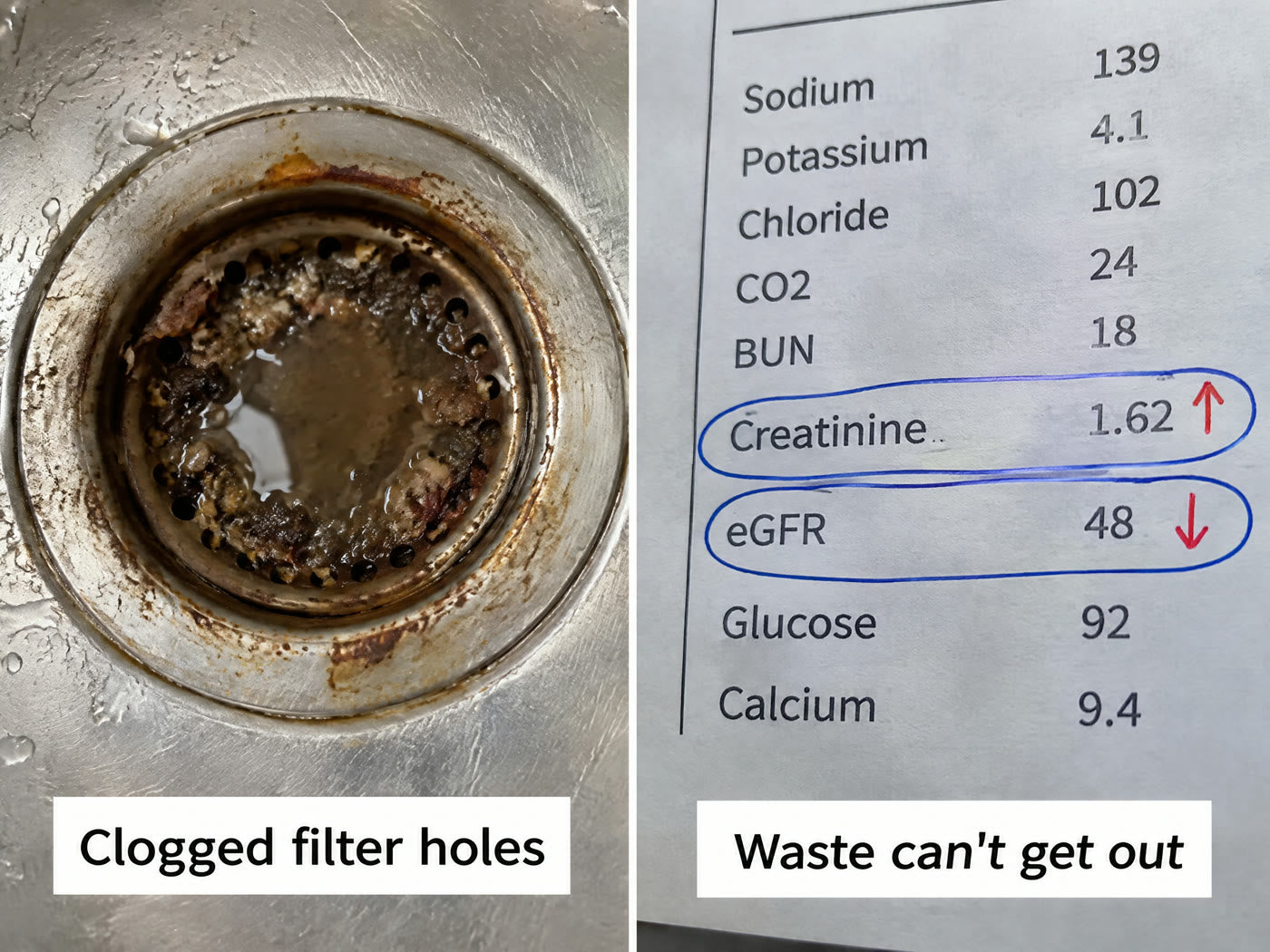
Your estimated Glomerular Filtration Rate drops year after year, meaning your kidneys are filtering fewer milliliters of blood per minute. Waste products like creatinine begin accumulating in your tissues.

2The Evening Ankle & Lower Leg Swelling (Fluid Retention)
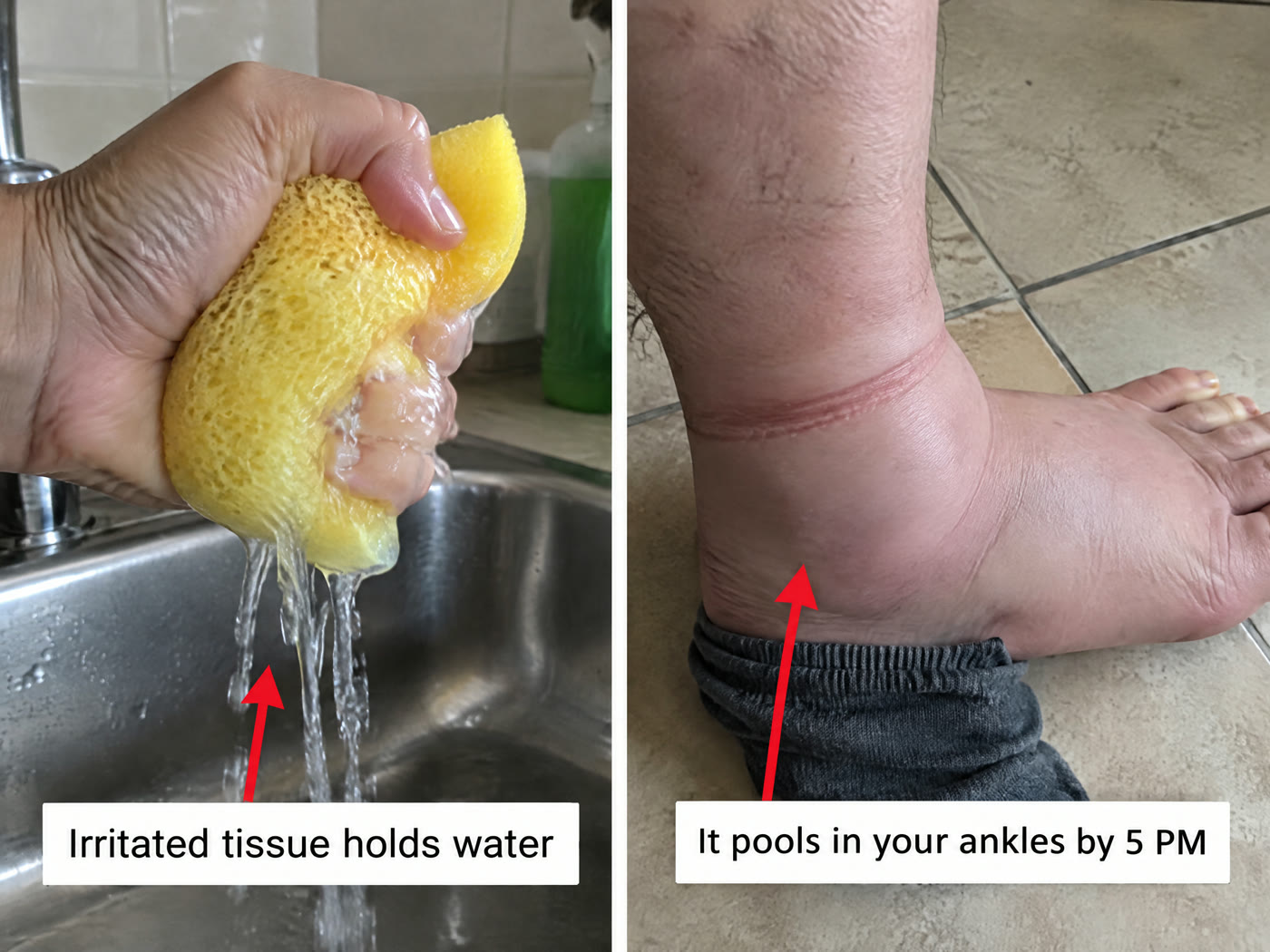
By 5 PM, your socks leave deep, painful grooves in your ankles. Your shoes feel tight. Your doctor prescribes a water pill (diuretic) that flushes water for a day, but the fluid pooling returns the moment it wears off.

3The Recirculated Waste Fatigue (The 2 PM Wall)
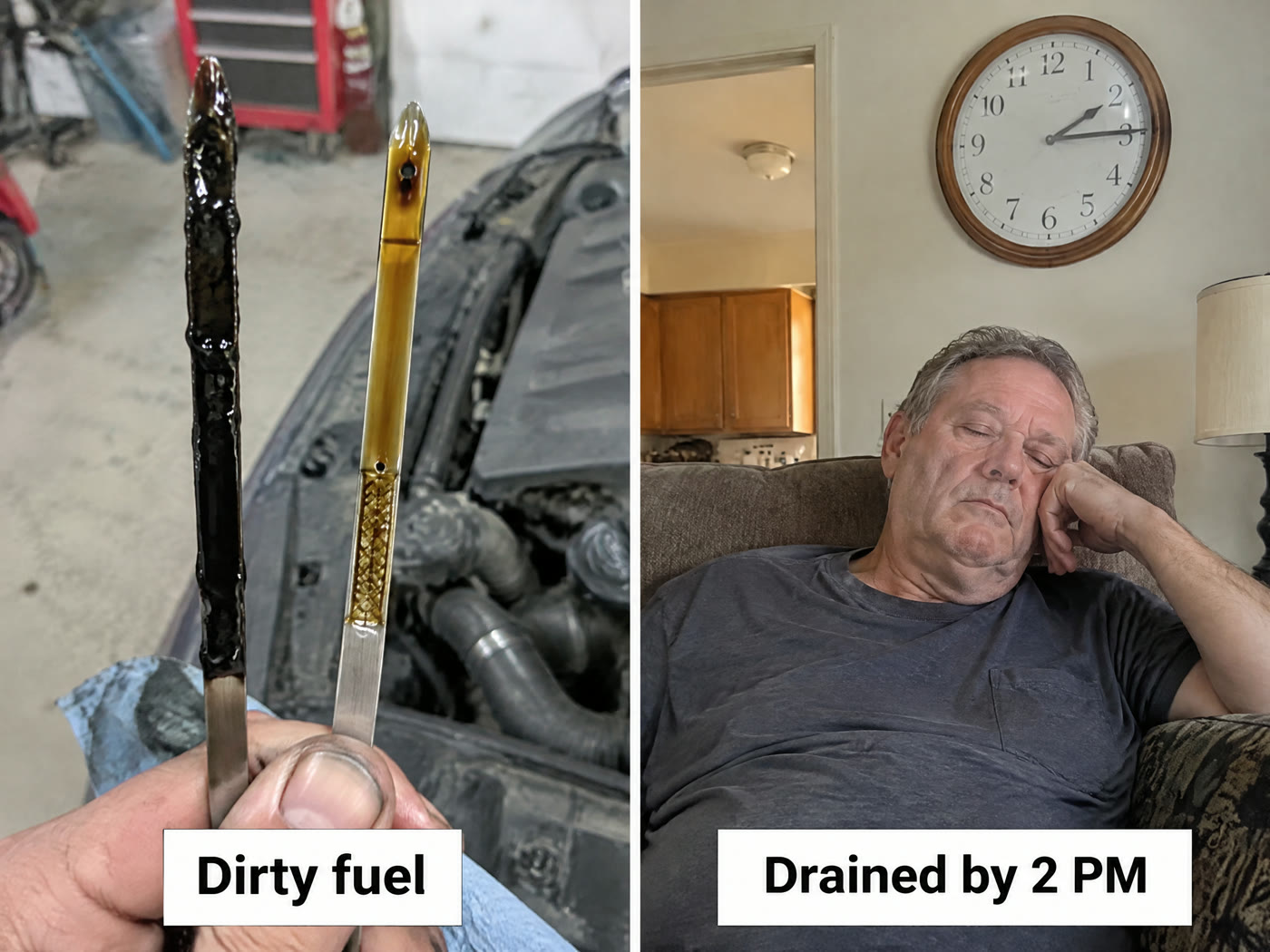
A heavy, dragging exhaustion that sleep doesn't fix. You wake up tired, hit a brick wall in the middle of the afternoon, and feel like your body is running on dirty fuel.

For decades, medical training treated these as three disconnected problems. Blood pressure medication for the eGFR. Diuretics for the swelling. "It's just aging" for the fatigue.
They missed the master switch running all three simultaneously.
The Nephron Filter Oxidation Trap
Inside each of your kidneys sit roughly one million microscopic filtering units called nephrons.
Think of each nephron as a tiny, ultra-delicate coffee filter made of fragile walls. Every minute, blood rushes through these filters under high pressure, separating pure nutrients from metabolic waste.
Here is what nobody explained to you:
Your kidney filters are rusting.
Because your kidneys clean 20% of all the blood in your body every single minute (filtering about 45 gallons a day), they endure more chemical wear and tear than almost any other organ.
Every single day, corrosive stray chemical sparks attack the delicate fats in your filter walls. Over time, that thin membrane corrodes just like a steel car door exposed to salt on a winter highway:
- Clogged filter holes: As the filter walls corrode and scar, the microscopic holes break down. Your kidneys can't clear waste fast enough. Your lab report flags this as declining eGFR and climbing creatinine.
- Irritated tissue traps water: The irritated, inflamed filter tissue acts like a wet sponge, signaling your body to hold onto fluid. Gravity pulls that backed-up water down into your ankles and lower legs by 5 PM.
- Dirty fuel recirculates: Instead of being cleanly dumped into your urine, toxic waste leaks back into your bloodstream. Your engine is forced to run on muddy, dirty fuel, leaving you drained, sluggish, and exhausted by 2 in the afternoon.
Now look at what your prescription is actually doing:
Why Your Filters Are Vulnerable to "Hidden Rust"
Lowering the water pressure in a pipe does nothing to stop rust from eating through the filter screen.

- Lowering Pipe Pressure (Blood Pressure Rx): Eases the mechanical rush of blood into the kidney. That protects against bursts. But turning down the faucet does zero to stop the chemical rust chewing through the filter screen.
- Stopping Filter Rust (24mg Astaxanthin Shield): Coats the delicate fat membranes of the filter in an impermeable anti-rust seal. It neutralizes corrosive sparks on contact, halts tissue breakdown, and lets the filter clean smoothly.
Why Standard Renal Vitamins and Antioxidants Failed You
When patients discover their filters are rusting, they naturally try taking everyday antioxidants like Vitamin C, Vitamin E, or turmeric. But inside the kidneys, these ordinary supplements fail:

- Vitamin C (Water-Soluble Flaw): 100% water-soluble. Flushes straight into your bladder within 3 hours. It cannot penetrate fatty filter membranes.
- Vitamin E (Single-Layer Flaw): Only covers one side of the membrane. Under intense renal stress, it runs out of steam and turns into a corrosive oxidizer itself.
- 24mg Astaxanthin (Bilayer Armor Shield): Fat-soluble marine molecule spanning both sides of the filter wall. 6,000x stronger than Vitamin C and never turns toxic.
What We Discovered Testing Popular Astaxanthin Brands (Buyer's Guide)
Over the last two years, Astaxanthin has gained widespread attention. You may have seen popular brands like ClarityMD or Rovina promoting 12mg softgels.
Here is our honest editorial evaluation:
The Renal Dosage Reality: Why 12mg Leaves Kidneys Short
Brands like ClarityMD and Rovina deserve credit for using real microalgae and oil carriers. A 12mg dose is a great starting point.
However, your kidneys are not your skin. Because your kidneys filter 45 gallons of highly pressurized blood every day, a 12mg dose is heavily absorbed by your liver, arteries, and bloodstream before enough reaches the deep kidney filters.

Side-by-Side: What Actually Reaches Your Kidneys?
| Clinical Standard | Revella 24mg | ClarityMD 12mg | Rovina 12mg | Drugstore Brands |
|---|---|---|---|---|
| Active Astaxanthin Dose | 24mg Clinical Saturation | 12mg (Half-Dose) | 12mg (Half-Dose) | 4mg (Fairy Dust) |
| Glomerular Filter Reach | Full Saturation | Partial / Depleted | Partial / Depleted | None |
| Delivery Base | MCT Coconut Oil | Safflower / Olive Oil | Coconut Oil | Dry Powder / Soy |
| Full Membrane Span | Yes (Both Layers) | Partial | Partial | Outer Surface Only |
← Swipe the table to compare all brands →
What Real Customers Notice in 30 to 90 Days

- Days 1 – 14 (The Fluid Flush & Ankle Relief): As the protective shield coats your filter membranes, tissue irritation subsides. Trapped water begins clearing naturally. Socks stop digging deep trenches into your ankles, and evening swelling visibly deflates.
- Days 15 – 45 (The 2 PM Energy Reset): With clean filters functioning without friction, waste is flushed into urine instead of leaking into your bloodstream. The dragging afternoon "dirty fuel" crash lifts, replaced by steady, all-day mental clarity.
- Days 46 – 90 (Lab Test Stability): Your nephron filters are fully shielded against daily oxidative rust. At your next routine metabolic blood draw, patients frequently experience stable eGFR numbers and steady creatinine markers that surprise their doctors.
Frequently Asked Questions
Can I take Revella if I already take blood pressure medication or diuretics?
Yes. Astaxanthin works through a completely different biological pathway. Blood pressure medications ease the mechanical force of blood flowing through the pipes, while diuretics force temporary water loss. Astaxanthin works directly at the cell membrane as an anti-rust shield, neutralizing the corrosive oxidation that medications never touch. As with any dietary change, consult your doctor.
Why 24mg instead of the 12mg sold by other brands? Will it upset my stomach?
Because your kidneys clean 45 gallons of pressurized blood every day, a 12mg dose is largely absorbed systemically before an effective amount reaches your kidney filters. 24mg is the clinical saturation standard. Because Revella is suspended in gentle MCT coconut oil (instead of cheap soybean or fish oils), it is exceptionally smooth on digestion and causes zero stomach irritation.
How quickly will my order ship?
All orders placed today are processed and dispatched within 24 hours from our cGMP-certified facility in the United States and arrive at your doorstep in 3 to 5 business days via USPS Priority Mail.
Choose Your Revella 24mg Supply
Select your supply below to lock in clinical saturation pricing with Free US Shipping.
Something went wrong adding this to your cart. Please try again.
The "Empty Bag" 100% Money-Back Guarantee
Take Revella 24mg Astaxanthin for a full 30 days. If your evening ankle puffiness doesn't deflate, your 2 PM exhaustion wall doesn't lift, and you aren't completely thrilled with your physical energy, simply contact customer care for a prompt, courteous 100% refund, even if you return completely empty bags. No hassle.